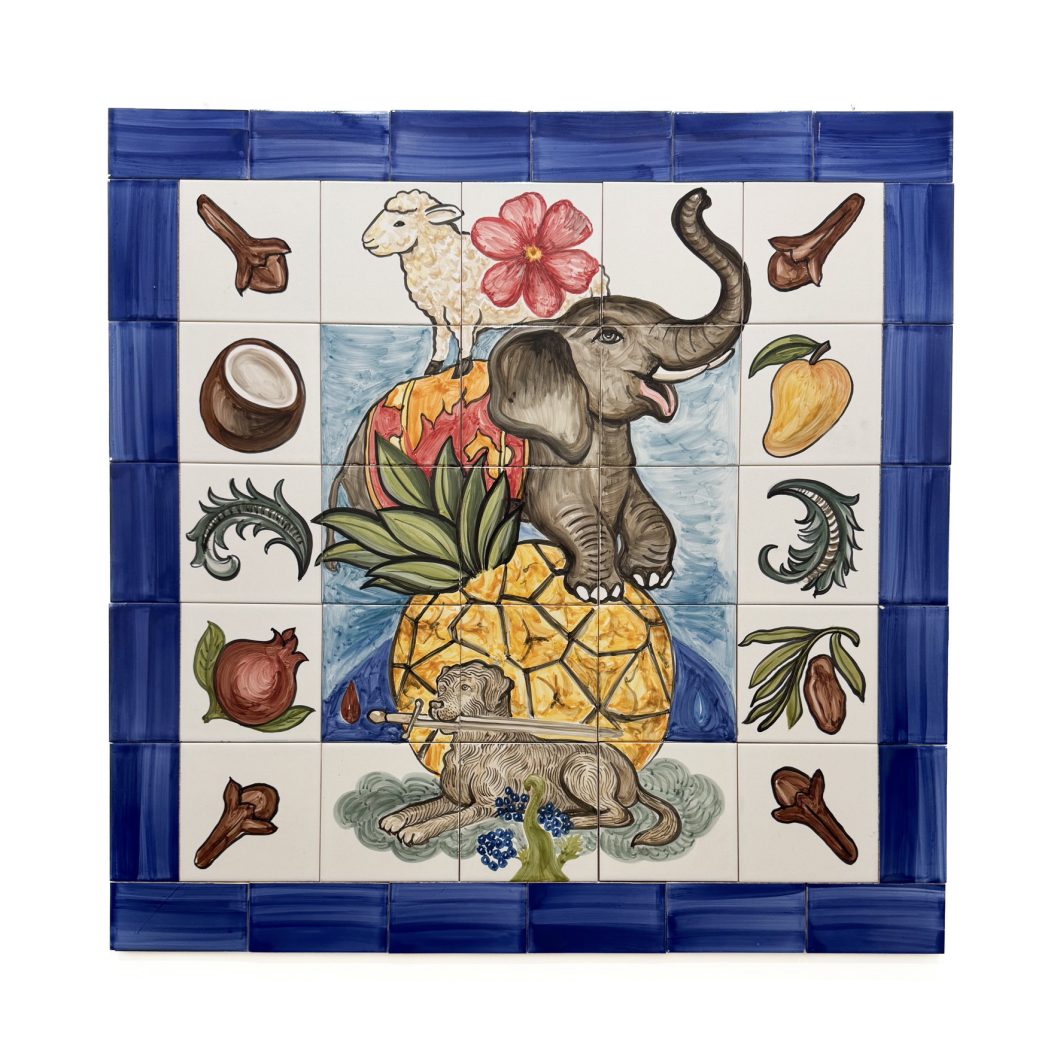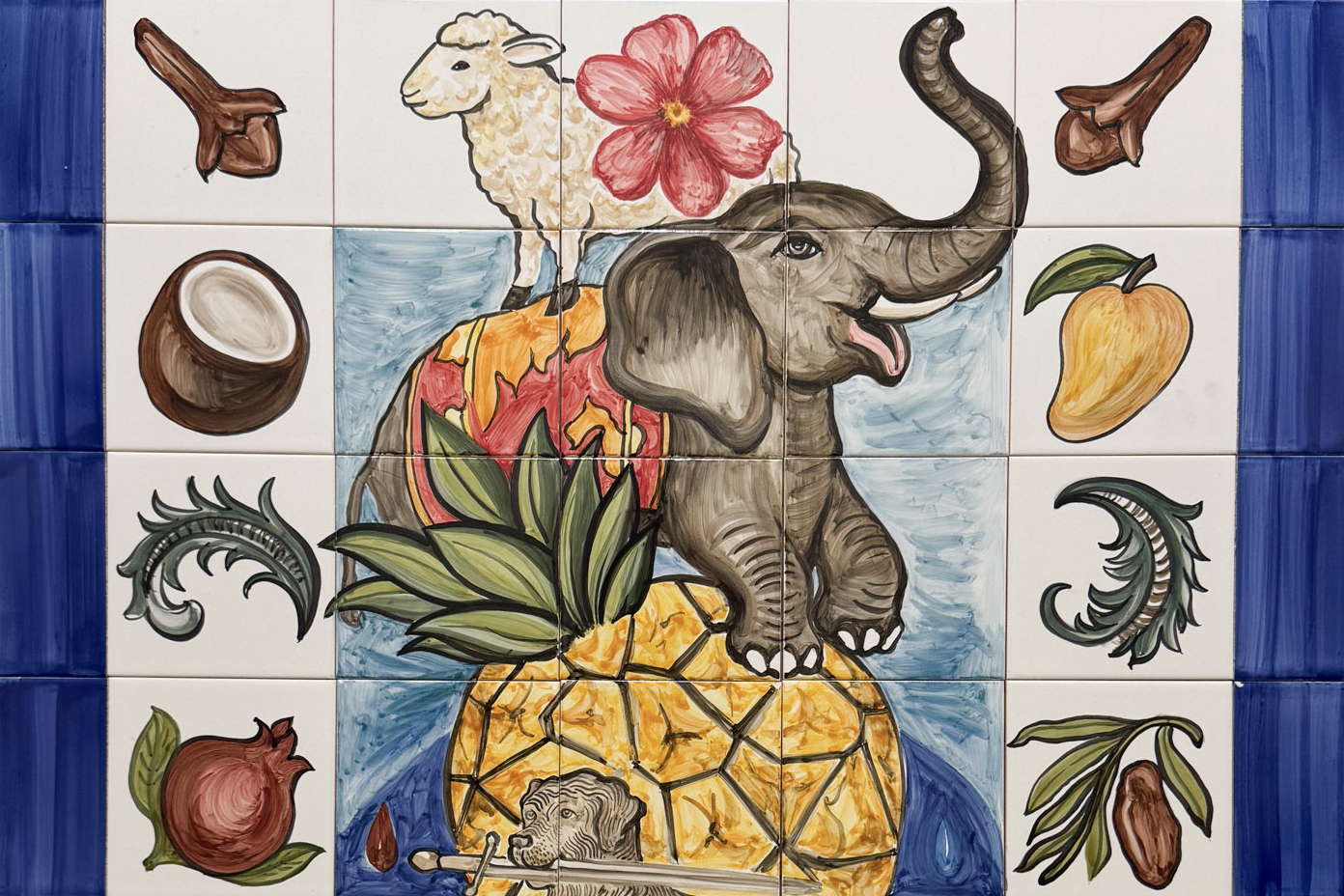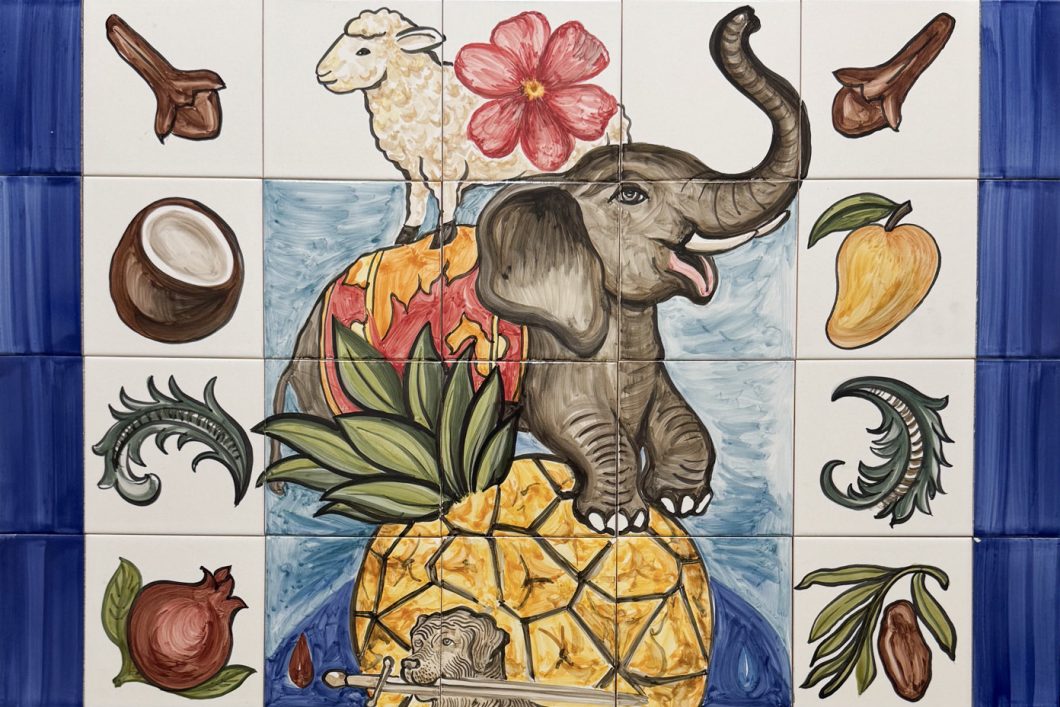
Using two materials central to Indo-European hybridity—the drawn azulejo tile and the embroidered textile—this work stages an allegory of conflict and coexistence. A lamb, an elephant, and a dog evoke the struggle for cultural supremacy unleashed by the Goan Inquisition in the sixteenth century, while the lotus, pomegranate, grape and date represent entwined botanical and spiritual histories. The pineapple, introduced by the Portuguese from Brazil; the mango, reshaped through Jesuit grafting techniques; and the clove (cravo da Índia), central to Portuguese colonialism and the spice trade, further speak of transcontinental exchange, extraction and entanglement. Through mirroredelements across hard tile and soft silk, the work reflects on how materials remember—the ghosts of empire and religion, still alive in the natural world—re-materialising latent layers of encounter, resistance and resilience within Goa’s hybrid visual and botanical archive.